All Concerning Peptides for Structure Muscle: Truths and Insights for Serious Lifters
Peptides have become an important aspect for significant lifters intending to enhance muscular tissue growth and recuperation. These substances, mostly composed of amino acids, can substantially influence the body's all-natural hormone manufacturing. However, while their benefits are encouraging, they come with prospective threats that call for careful consideration. Understanding the complex balance in between their downsides and benefits is crucial for athletes wanting to optimize their training. What lies ahead in this expedition of peptides?
What Are Peptides and Just How Do They Work?
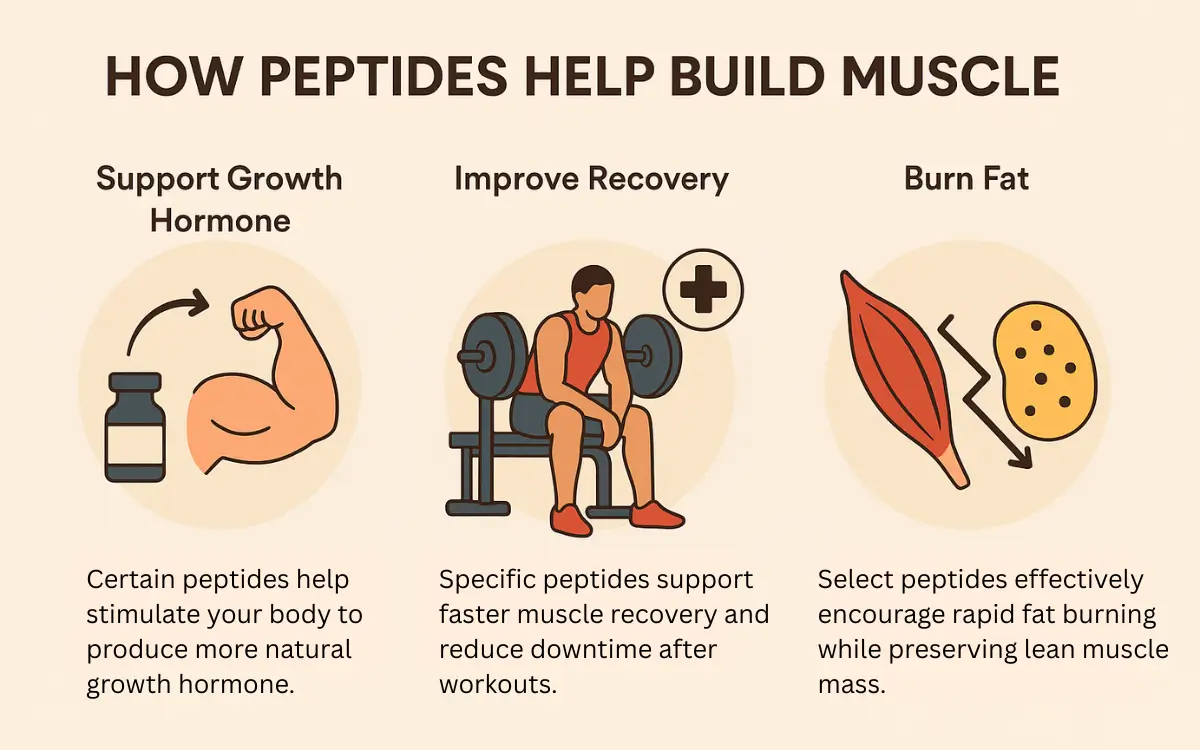
The performance of peptides exists in their ability to imitate the action of naturally occurring healthy proteins, causing enhanced interaction in between cells. This interaction promotes processes such as healthy protein synthesis and the release of development hormones - buy Peptides for Building Muscle. Peptides can differ in turn and length, each type serving distinctive features. Recognizing just how different peptides function allows athletes and physical fitness lovers to explore their prospective applications in support of their training objectives. Generally, peptides represent a significant area of passion in the domain of muscle mass advancement and recovery
Advantages of Peptides for Muscular Tissue Development
When thinking about the enhancement of muscle development, peptides offer many advantages that can considerably influence a person's training outcomes. These short chains of amino acids play a crucial duty in advertising muscle hypertrophy and healing. Peptides can promote the launch of growth hormone, which aids in muscle repair and regeneration, eventually bring about raised muscular tissue mass.
Peptides improve healthy protein synthesis, boosting the body's ability to maintain and build muscle tissue. They can additionally increase energy degrees, permitting for much more extreme workouts and much better performance throughout training sessions. In addition, peptides might help in reducing recuperation time by lessening muscle pain and inflammation, which is particularly useful for severe lifters who engage in strenuous training programs.
Popular Peptides Utilized by Athletes
Athletes increasingly transform to specific peptides to enhance their efficiency and assistance muscular tissue recovery. Among one of the most popular peptides utilized in sporting activities are Growth Hormone Releasing Peptides (GHRPs), such as GHRP-6 and GHRP-2, which stimulate the body's all-natural growth hormonal agent production. Another widely made use of peptide is Ipamorelin, understood for its capacity to advertise muscular tissue development while lessening adverse effects. In addition, CJC-1295, which functions synergistically with GHRPs, has acquired popularity for its prolonged result on development hormonal agent release.
Thymosin Beta-4 (TB-500) is preferred for its function in cells repair service and see this here recuperation, aiding athletes after intense training sessions. BPC-157, known for its healing properties, is often consisted of in healing protocols. These peptides are looked for after not only for their prospective to increase muscular tissue mass yet additionally for their capability to boost total athletic efficiency and expedite recuperation times.
Possible Threats and Adverse Effects
Lots of customers of performance-enhancing peptides might overlook the side impacts and prospective threats connected with their usage. While these substances can offer advantages in muscle development and recuperation, they can additionally cause significant health issues. buy Peptides for Building Muscle. Usual adverse effects might consist of hormone inequalities, which can disrupt natural testosterone manufacturing and lead to inability to conceive or state of mind swings. Additionally, some customers report experiencing fluid retention, joint pain, and raised danger of infections at shot sites
Lasting usage may lead to much more extreme consequences, such as cardio concerns, liver damages, or kidney dysfunction. Psychological impacts like anxiousness and hostility have additionally been kept in mind. The lack of policy in the peptide market elevates concerns concerning purity and dose, possibly leading to uncertain end results. It is vital for people considering peptides to consider these risks very carefully versus the wanted benefits before waging their usage.

Exactly How to Include Peptides Into Your Training Program
Integrating peptides right into a training routine can enhance muscle development and recuperation when done attentively. People ought to seek advice from a medical care specialist to figure out appropriate peptide types and dosages customized to their particular objectives and health conditions. Usual peptides for muscle building consist of Development Hormonal agent Launching Peptides (GHRPs) and Insulin-like Growth Element 1 (IGF-1)
Next, customers ought to click reference incorporate peptides right into their routine around workout times for peak effectiveness. Administering peptides post-workout can advertise recovery and muscle synthesis. Uniformity is crucial; because of this, keeping a normal timetable is essential for making best use of advantages.
In addition, integrating peptide usage with a well balanced diet plan rich in protein, in addition to an organized training program, will certainly yield the finest results. Surveillance development and adjusting dosages or types of peptides may be necessary based upon individual responses. Ultimately, a strategic strategy will click for more info help lifters harness the complete capacity of peptides in their training.
Frequently Asked Questions
Can Peptides Be Found in Medication Tests for Professional Athletes?
Peptides can undoubtedly be identified in drug examinations for athletes. Different testing approaches are utilized to recognize banned compounds, consisting of certain peptide series, making it vital for professional athletes to be mindful of their usage and potential effects.
Are Peptides Legal to Make Use Of in Competitive Sports?
Peptides are generally prohibited in competitive sporting activities by major organizations like the World Anti-Doping Firm. Professional athletes making use of peptides run the risk of disqualification and possible penalties, stressing the importance of sticking to policies regulating performance-enhancing materials in their particular sports.
Exactly How Do Peptides Contrast to copyrights for Muscular Tissue Growth?
Peptides usually advertise muscle growth with less side results than copyrights, which can cause substantial hormone inequalities. Nonetheless, copyrights typically provide quicker outcomes, while peptides might provide a more gradual and possibly much safer method to muscle enhancement.
Can Peptides Be Used for Weight Loss as Well?
Peptides can without a doubt be used for weight loss. They may boost metabolic rate, promote fat oxidation, and lower hunger, making them a potential tool in weight monitoring approaches when integrated with appropriate diet plan and exercise.
What Is the Advised Dosage for Muscle-Building Peptides?
The suggested dosage for muscle-building peptides differs, commonly ranging from 1 to 3 milligrams daily, relying on the certain peptide and specific goals. Consulting a medical care specialist is recommended for personalized advice and safety.
Peptides have actually emerged as a vital aspect for serious lifters intending to enhance muscle mass development and recuperation. Peptides, usually referred to as the structure blocks of proteins, are brief chains of amino acids connected by peptide bonds. Among the most popular peptides made use of in sports are Development Hormone Releasing Peptides (GHRPs), such as GHRP-6 and GHRP-2, which boost the body's all-natural development hormone manufacturing. Incorporating peptides into a training program can enhance muscle mass growth and recovery when done attentively. The recommended dosage for muscle-building peptides differs, normally ranging from 1 to 3 milligrams per day, depending on the particular peptide and individual objectives.